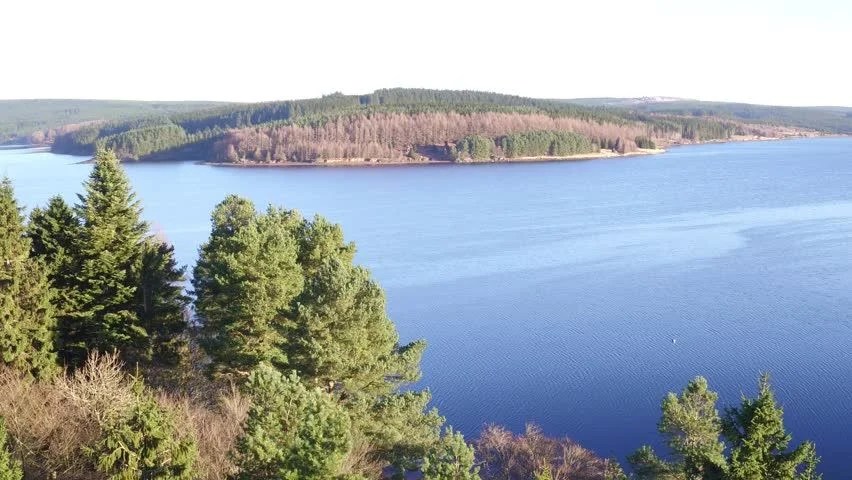
Home
Welcome to the Kielder Osprey Project website. You can read more about the Project’s partners here.
The Timeline in the top bar has key events for this season.
Background
Ospreys have bred in Kielder Forest since 2009. During that time, the population grew from 1 to 7 breeding pairs by 2021, which saw a record 16 chicks fledge successfully. 2022 -2024 saw a fall in productive nests for varying reasons. However 124 young ospreys left on migration between 2009 and 2024, a significant achievement. We hope that 2025 will see a rise in successful nests once more.
Seeing the ospreys
The best places to look out for ospreys are at the dam, Tower Knowe Visitor Centre, Leaplish Bay at Kielder Waterside and the weir at Bakethin. They fish at any time of day, but early morning and early evening are often good times. They can catch anywhere, but will often fly along the edges of the reservoir where the water is shallower.
Osprey Watch is run by Northumberland Wildlife Trust from the wildlife cabin at Tower Knowe, near the dam. Visitors are offered views of the activity on Nest 7 across the reservoir via scopes, and 4K live video via the nest cam in the cabin. Osprey Watch runs on Saturdays, Sundays and Wednesdays from 11.00-16.00 until mid August.
At Kielder Castle – at the other end of the Reservoir – live footage will be shown.
Wild Intrigue, a small ecotourism social enterprise, will be running osprey watching cruises again. https://www.wildintrigue.co.uk/mini-expeds/osprey-watching-cruise/
You can watch action on Nest 7 live via this YouTube link
There is no public access to the nest sites. Ospreys are a rare bird of prey and are protected in law. Disturbing them when they are breeding is an offence.
(C) KIELDER OSPREY PROJECT/JOANNA DAILEY
https://kielderospreys.wpcomstaging.com/
The above link is to the Kielder Forest Osprey Project Home Page, It is Highly recommended. Vitually all the information UKOI has on the Kielder Forest Osprey comes from this site.
NEST 12.
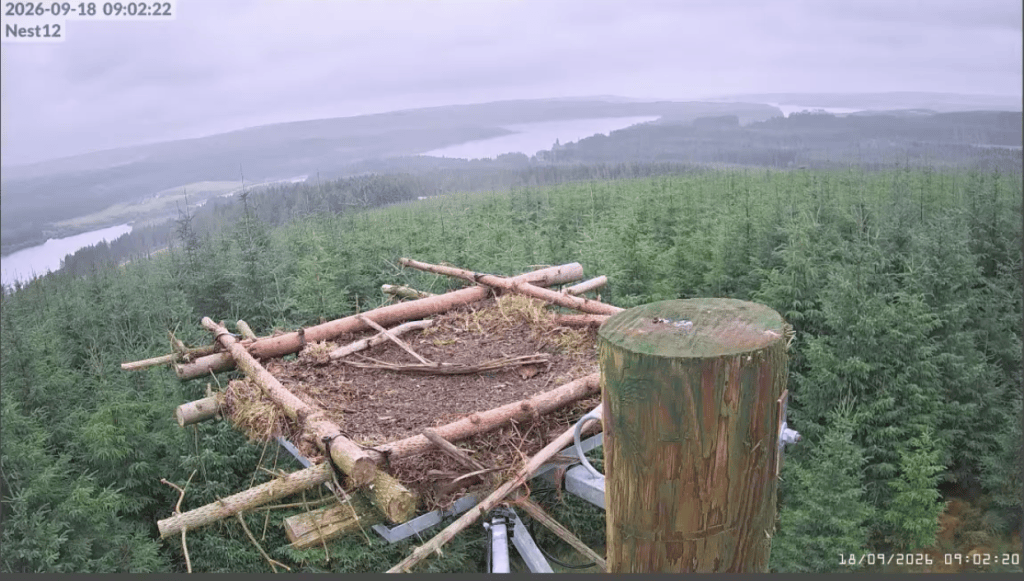
First, some background. The unringed adults occupying the nest were unsuccessful in 2024 and 2025 on a nest they built on a dead tree surrounded by windblow. The area could not be accessed to put up a pole, so instead Forestry England erected one on a higher site nearby in the hope the more panoramic view and stablity of the nest platform would attract the pair. The male started to use the new platform on the day he was first seen back in the Forest.
It is 100 years this year since Kielder Forest was established. Lord Robinson, chair of the Forestry Commission, was the visionary who established Kielder Forest. Nest 12 will be named the Lord Robinson Nest although the webcam will still show Nest 12 – too much space is needed for the longer name!
The ringing of the first chicks to hatch on this nest is a special day for those who worked hard to put up the pole and platform, and also staff continuing to work towards making an observation area at Kielder Castle for when it reopens. The Lord Robinson Nest is the first to be visible from a Forestry England visitor centre here.
On to the ringing. Chick 1 was a feisty young osprey, interested in the surroundings on the ground and what was happening.

(c) Forestry England
Ringed 1K1, the weight of 1530g at 35 days old and tarsus size indicated a female (EDIT: later determined to be male). He is named Kielder.

(c) Forestry England
Chick 2 was less happy being away from home.

(c) Forestry England
Chick 2 wears colour ring 1K2 and is called Kershope (pronounced Kershup) after a forest adjacent to Kielder and managed by Forestry England. Weighing 1415g 1K2/Kershope is thought to be male.

(c) Forestry England
The youngsters were returned to their nest. Forestry England climber Wayne took this shot of them admiring the stunning view from the nest.

Since their return two fish have been delivered and consumed, and the youngsters are currently dozing with Mum in the sunshine.
(C) Forestry England, Kielder Osprey Project and Joanna Dailey.
NESTS
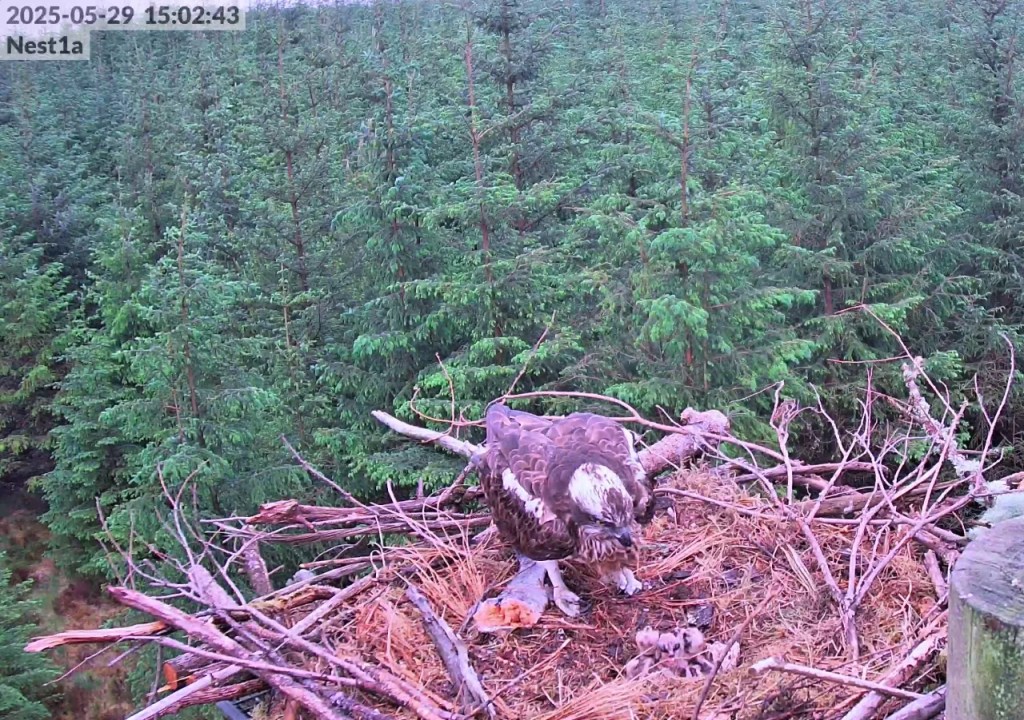
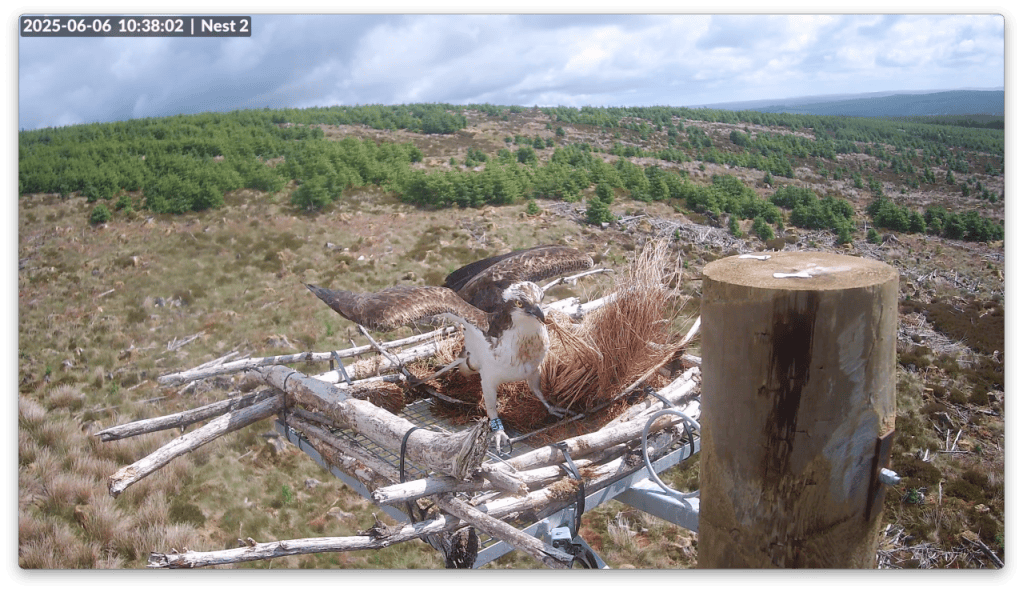
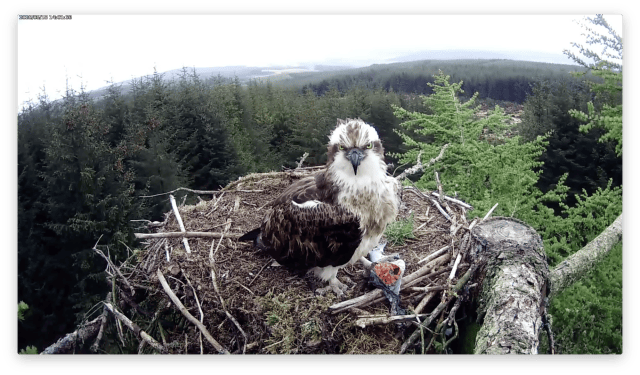
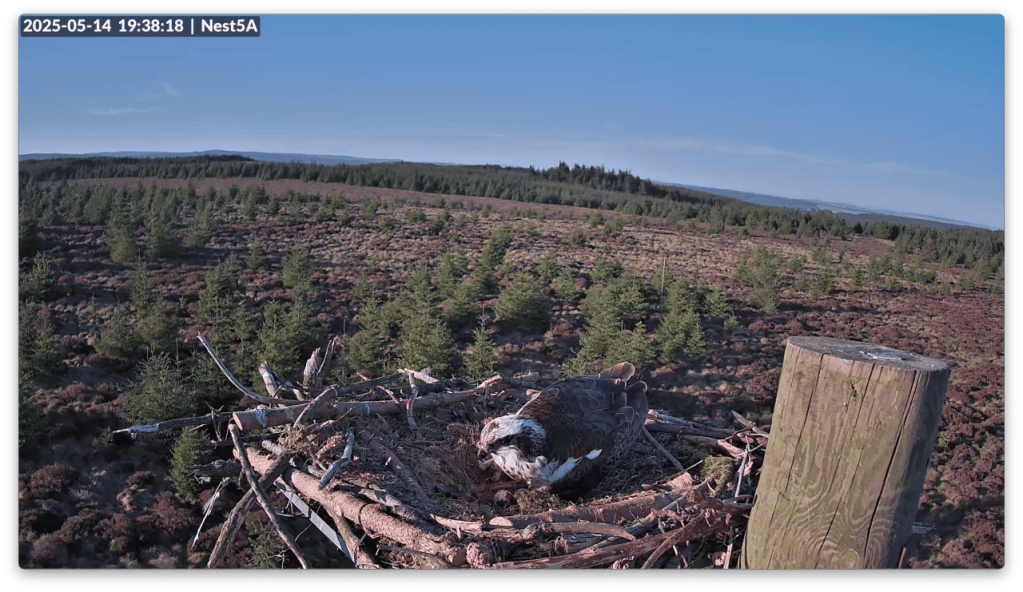
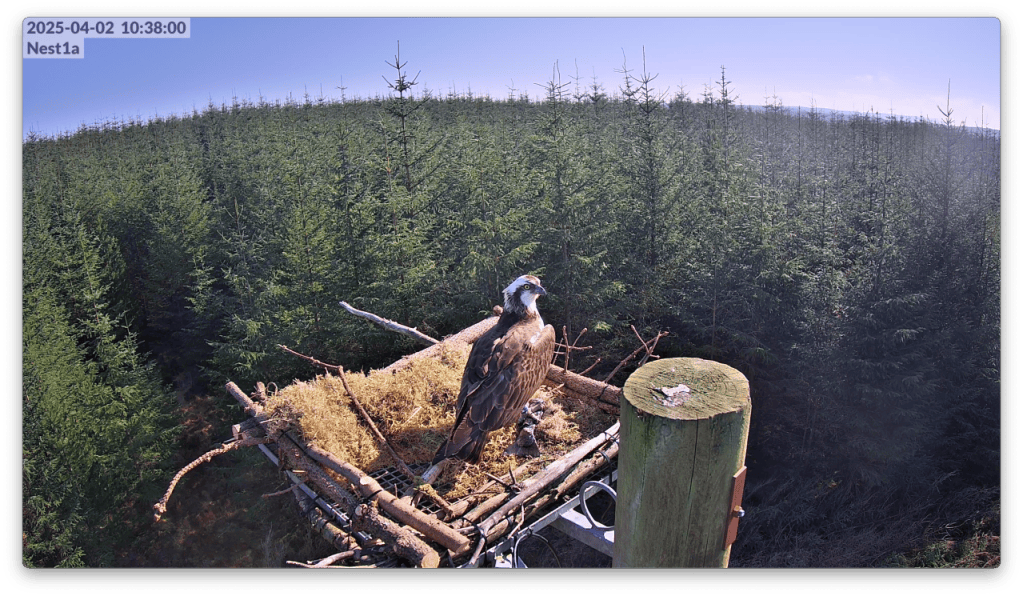
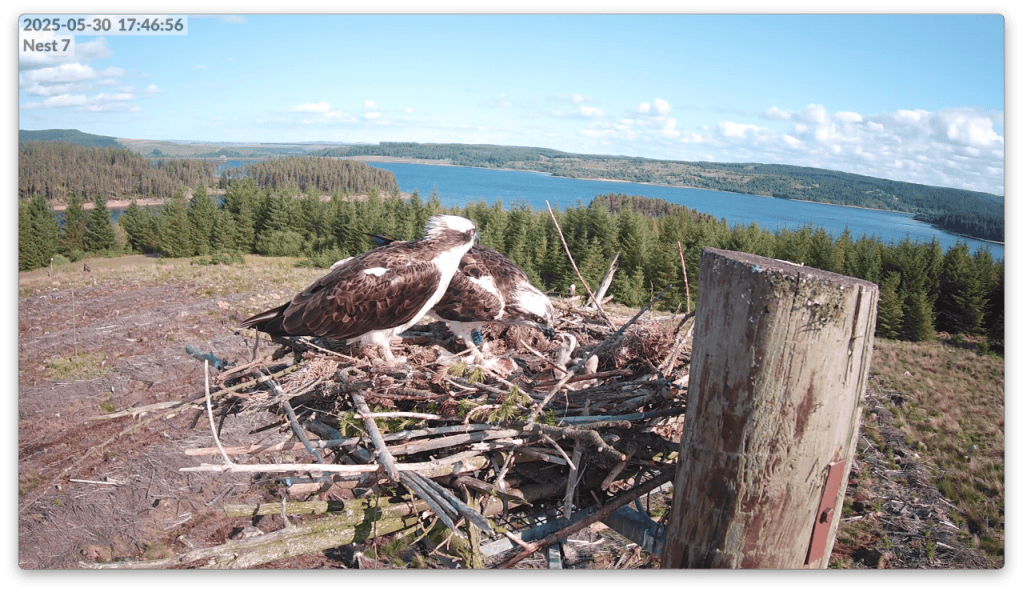
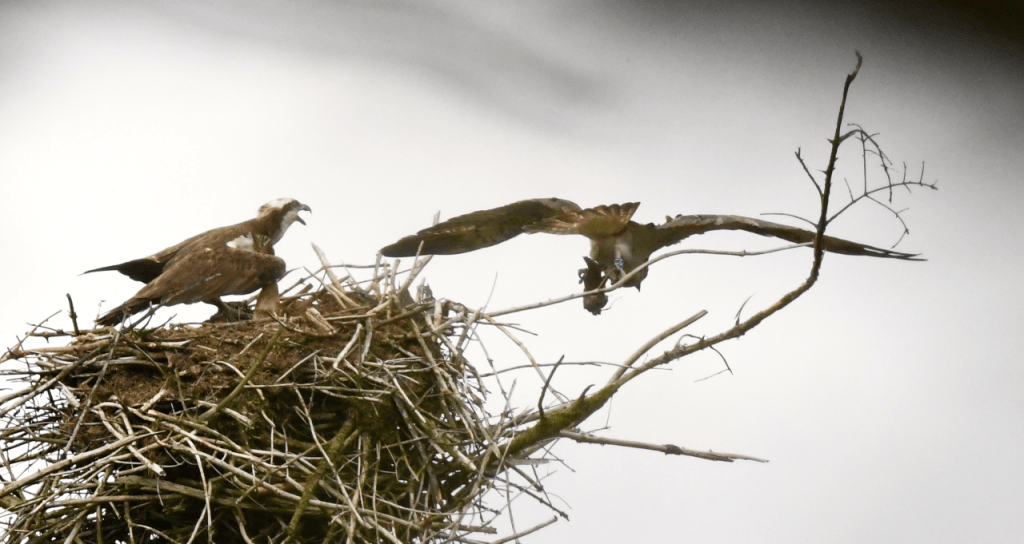
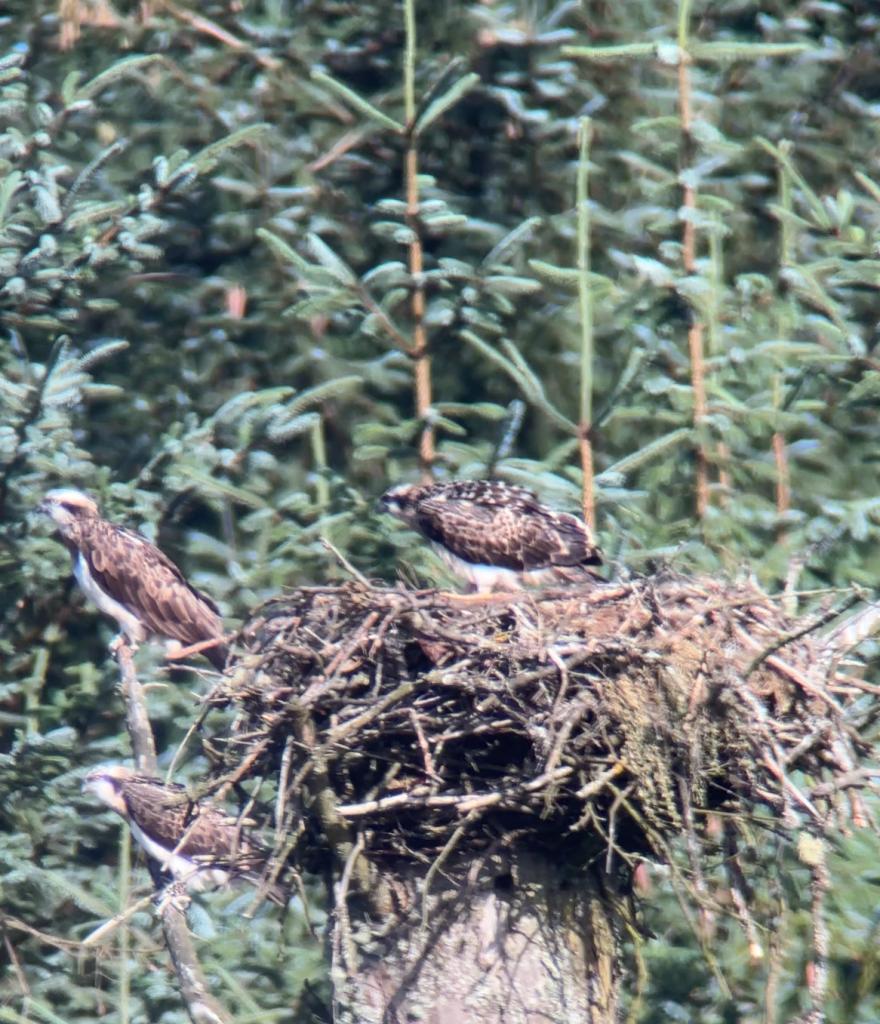
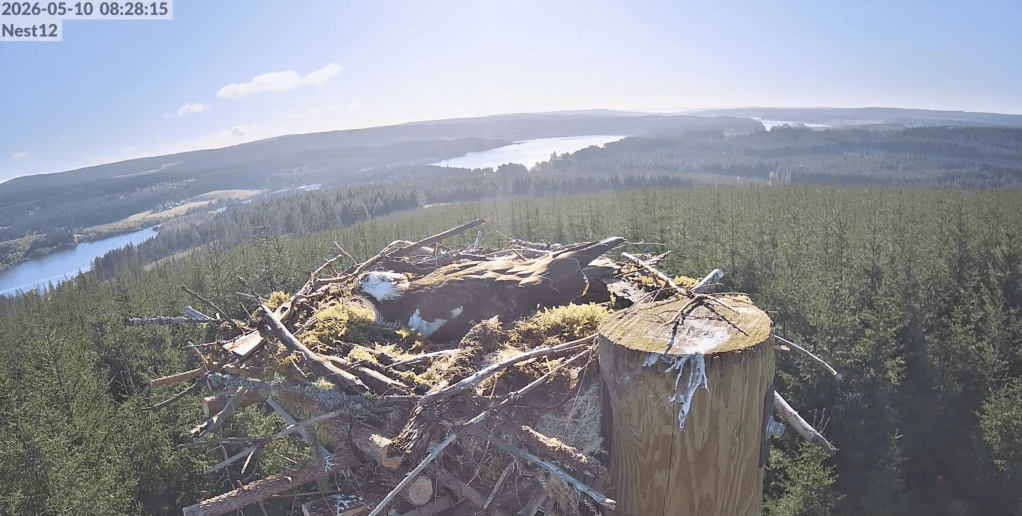
PHOTOGRAPHS (C) KIELDER FOREST OSPREY PROJECT/FORESTRY ENGLAND.
Photographs left to right and descending Nests, 1A, 2. 3, 4, 5A, 6, 7, 8, 10 and 12.
KIELDER FOREST PROGENY KNOWN TO HAVE RETURNED/ CURRENT STATUS


